urRescue

Your shelter is fifty living rooms.

Foster-based, breed and species rescues run a real organization without a building. The animal record, the custody chain and the care history work the same whether the animal is in a kennel or on somebody's sofa.

Already in our directory? Claim your existing listing instead — that keeps the record and its history, rather than creating a second one.

Built for animals you cannot see from your desk

Rescue software usually assumes a facility. When the animals are spread across a county in volunteer homes, the parts that matter are custody, communication and continuity — not a kennel map.

Custody, not location

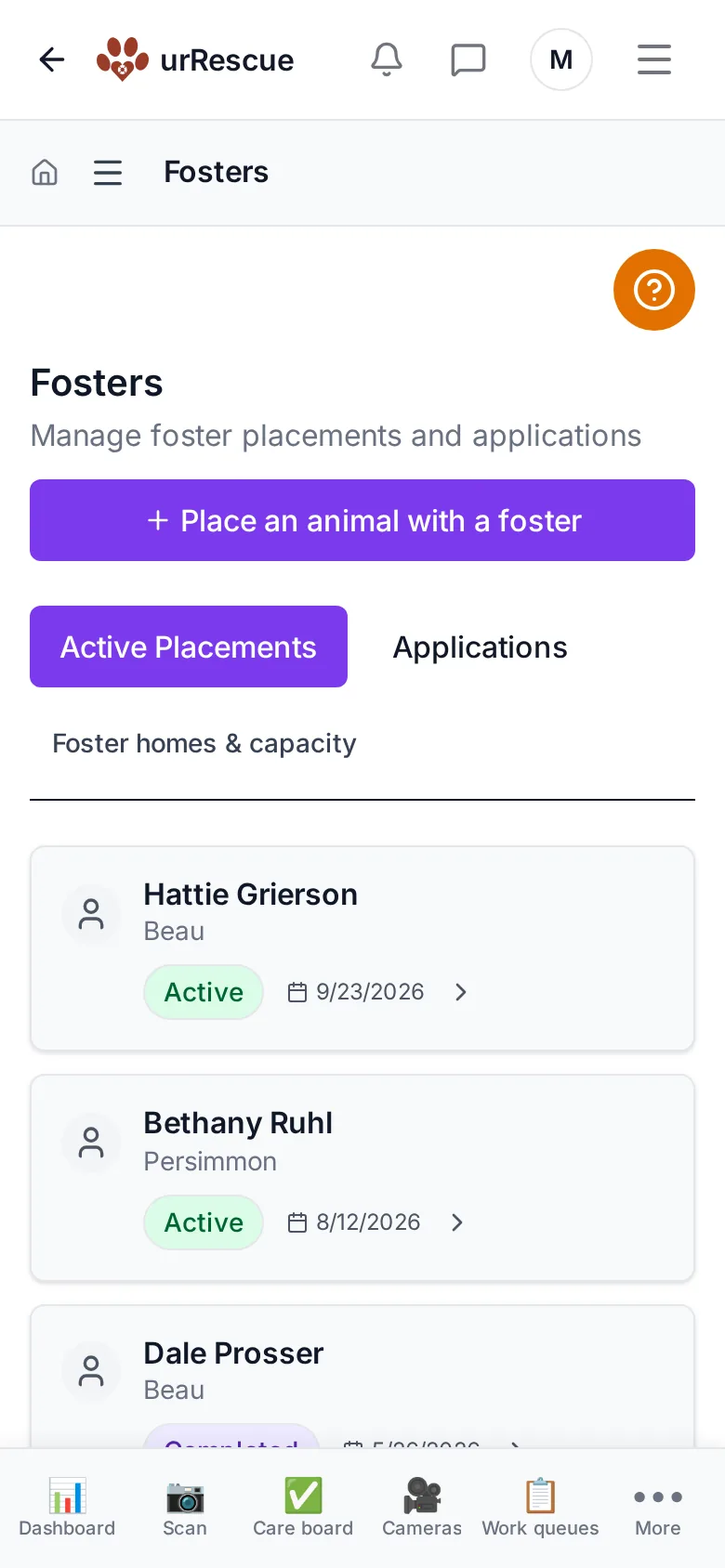
Who has this animal right now, since when, and on whose authority. A foster placement is a custody change with a name attached, not a note in a spreadsheet.

Fosters as people, not rows

Applications, placements and check-ins — so a coordinator can see which animals are placed, which fosters are carrying how much, and who has not been heard from.

Care recorded where it happens

A foster records feeding, medication and behaviour from a phone, in the animal's own record. It is there for the vet, and it is there for the adopter afterwards.

The same workspace shelters use

One substrate, two doors. Nothing here is a reduced version.

Intake

Owner surrender, transfer in, stray — with microchip lookup at entry, because an animal already known to the ecosystem should not become a second record.

Adoption

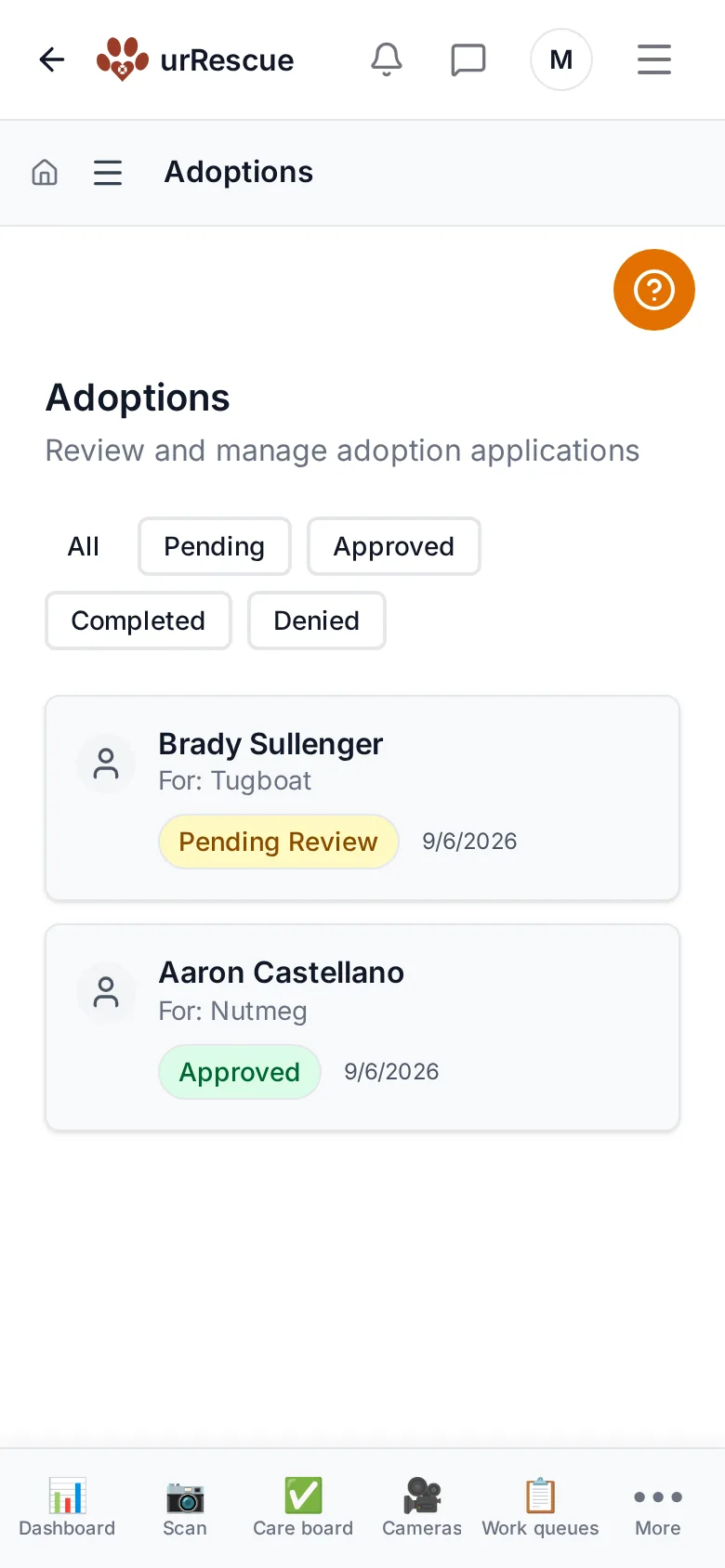
Applications, contracts, and the 30/90/365 follow-ups after the animal is home.

Volunteers

Roster and hours. Rescue runs on people who are not staff, and they need to exist in the system as themselves.

Veterinary relationships

The practices you work with, attached to the animals they treat rather than kept in a separate address book.

Transfer between organizations

Keep a list of the rescues and shelters you work with, with an agreement on file, and invite them to pull an animal. It moves into their care when they accept.

Transport

In progress

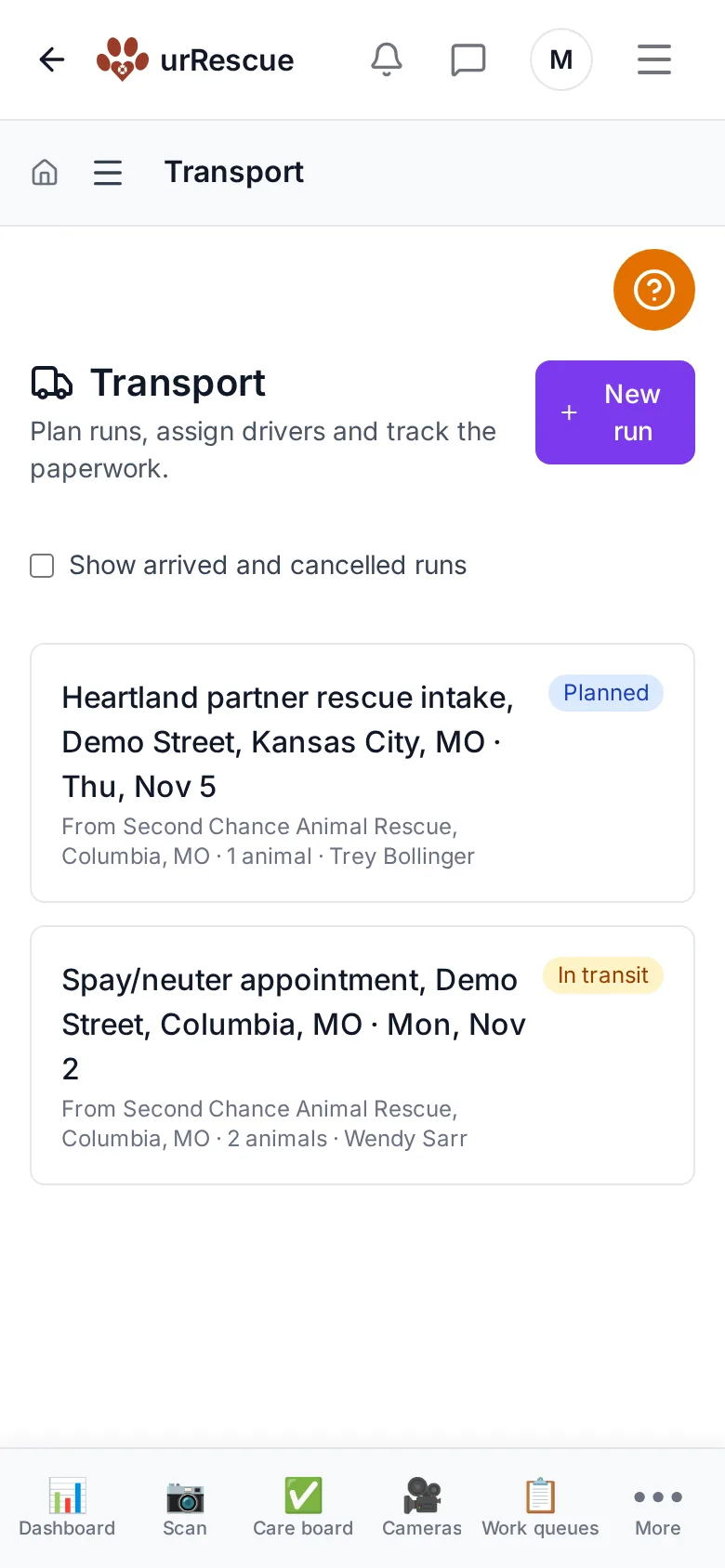
Plan a transport run from your shelter: drivers from your staff and volunteers, each animal’s paperwork checklist and health certificate, and planned, in transit and arrived. At a partner shelter the animal moves into their care when they accept the transfer. Multi-leg relays are not built.

Temporary collar tag

Print a QR collar tag for any animal in your care, including one whose name you do not know yet.

Surrender help

The intake you prevent is the placement you do not have to find. Your public form offers the help you list before anyone surrenders. Staff work each request: offer resources, book an appointment, or take the animal in.

Being built now

Named because it is coming. Not in your hands yet.

Scan to move

Planned

QR labels for locations, and movement recorded by scanning rather than typing.